
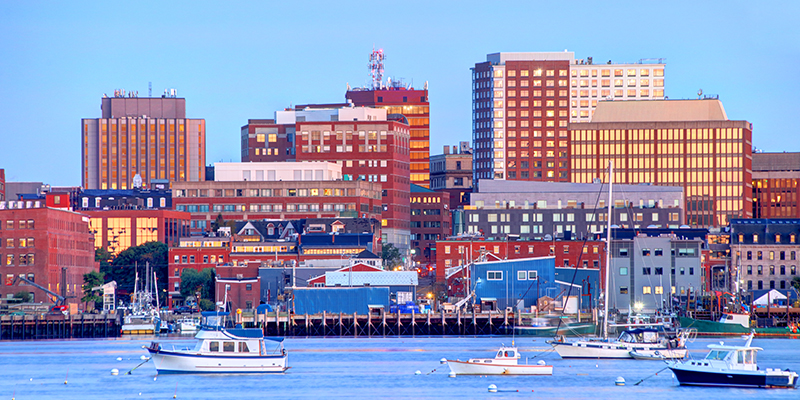
Which U.S. metro areas offer the best quality of life in 2026? A new national ranking from RentCafe.com points to a mix of large urban hubs and mid-sized markets led by Washington, D.C.; Portland, Maine; and Kansas City, Missouri. The study evaluates 149 metropolitan areas across the U.S. to identify where residents are enjoying the highest overall livability.
Through 17 measurable criteria (including cost of living, health care access, education levels and community engagement) the report sheds light on which places offer the best blend of three major categories: socioeconomics, quality of life, and location and community.
A look at America’s most livable cities
1. Washington, D.C.
Washington, D.C., occupies the top position in 2026, ranking first overall in both quality of life and location and community. The metro’s performance reflects its continued investment in health care access, public spaces and cultural infrastructure.
2. Portland, Maine
Portland claims the runner-up spot after leading the list last year, ranking second in location and community and fifth in quality of life. The metro benefits from a dense health care provider network, access to higher education and a high level of membership associations. Although housing and living costs remain above the national average, Portland’s stable employment conditions and income growth support its overall livability.
3. Kansas City, Missouri
Kansas City places third, driven by a combination of below-average cost of living and strong performance in socioeconomics (No. 4) and location and community (No. 6). Income growth, shorter commute times and widespread access to recreational facilities further support its high position in the rankings.
4. Des Moines, Iowa
Des Moines ranks fourth nationally and third in location and community. Short commute times and significantly fewer housing challenges contribute to the metro area’s day-to-day livability and housing stability. Furthermore, the metro’s educated workforce, supported by local colleges and universities, feeds into core industries such as insurance, finance and technology.
5. Ann Arbor, Michigan
Ann Arbor comes in fifth overall, supported by a strong performance in quality of life (No. 4) and one of the nation’s highest concentrations of health care providers. Access to education, wellness resources and outdoor amenities underpins its livability score. Meanwhile, strong income growth and a dense network of professional and academic institutions continue to attract young professionals and skilled workers.
6. Albany, New York
In the sixth spot is Albany, New York, ranking fourth in location and community thanks to favorable commute times, access to education and recreational infrastructure. Stable employment conditions and a low unemployment rate further support its position.
7. Columbus, Ohio
Next is Columbus, Ohio, which benefits from a cost of living below the national average and a diversified economic base spanning education, technology and finance. The metro scored points for its focus on wellness, food access and recreation, placing it high in the rankings for both quality of life (No. 14) and location and community (No. 11).
8. Asheville, North Carolina
Asheville, North Carolina, ranks eighth overall, supported by one of the highest income growth rates among all the metros analyzed. Short commute times, strong health care access, and a high level of community engagement contribute to its top 10 location and community score (No. 6).
9. Harrisburg, Pennsylvania
Harrisburg, Pennsylvania, is the ninth most livable metro area in the U.S. thanks to relative affordability and a solid performance in location and community (No. 9). An infrastructure designed to shorten the time spent commuting and a stable employment base – supported by health care and regional employers – also underpin its socioeconomics ranking (No. 13).
10. Boise, Idaho
Finally, Boise, Idaho, rounds out the top 10, driven by labor force growth in construction, manufacturing and education, along with low unemployment. While it ranks lower in socioeconomics (No. 30) compared to other top metros, the area benefits from strong population growth and outdoor-oriented amenities, which boosted its location and community score (No. 19).
Midwest leads regional livability rankings
The Midwest emerges as the strongest-performing region in the 2026 livability rankings, with six metro areas in the top 20, more than any other region. Kansas City, Missouri (No. 3); Des Moines, Iowa (No. 4); and Ann Arbor, Michigan (No. 5) anchor the Midwest’s performance at the top of the list and are followed by Columbus, Ohio (No. 7); Indianapolis (No. 11); and Minneapolis (No. 16).
Across these markets, consistent strengths include affordability, shorter commute times and strong community infrastructure. Kansas City, Missouri, and Des Moines, Iowa, rank especially high for location and community, while Ann Arbor, Michigan, stands out for quality of life. Minneapolis further reinforces the region’s claim as most livable, leading other Midwestern metros in socioeconomics thanks to steady income growth and relative affordability.
The West and Northeast follow closely, each with five metros in the top 20. Boise, Idaho, (No. 10) leads the West, alongside Fort Collins, Colorado (No. 12); Seattle (No. 13); Spokane, Washington (No. 19); and Colorado Springs, Colorado (No. 20). The Northeast is led by Portland, Maine (No. 2); with Albany, New York (No. 6); and Harrisburg, Pennsylvania (No. 9) also ranking high, along with Pittsburgh (No. 14) and Manchester, New Hampshire (No. 15). The South rounds out the top performers with four metros: Washington, D.C. (No. 1); Asheville, North Carolina (No. 8); Wilmington, North Carolina (No. 17); and Baltimore (No. 18).
How the top metros stand out across key metrics
Performance varies across livability categories. Socioeconomic leaders such as Springfield, Missouri; Charleston, South Carolina; Spokane, Washington; Kansas City, Missouri; and Ogden, Utah, stand out for affordability, steady income growth and favorable employment conditions.
Meanwhile, quality of life rankings are led by Washington, D.C., followed by Seattle; San Francisco; Ann Arbor, Michigan; and Portland, Maine. These metros stand out for strong health care access, abundant fitness and recreation options, and widespread availability of healthy food. Location and community metrics again place Washington, D.C., at the top, with Portland, Maine; Des Moines, Iowa; Albany, New York; and Kansas City, Missouri, following closely, thanks to the metros’ strong education levels, high concentrations of membership associations and shorter commute times.