
Industrial outdoor storage (IOS) has long been a familiar sight near ports, airports and industrial corridors. Yet despite its visibility, the sector remained largely overlooked by institutional investors for years. That is changing rapidly.
In a recent episode of NAIOP’s Inside CRE podcast, NAIOP President and CEO Marc Selvitelli, CAE, spoke with Leo Addimando, managing partner and cofounder of Alterra Property Group, about the evolution of IOS from an under-the-radar property type into one of commercial real estate’s fastest-growing sectors.
Defining a Once-ambiguous Sector
Alterra has been at the forefront of that transformation, acquiring more than 470 IOS properties nationwide. According to Addimando, one of the biggest reasons the sector remained overlooked for so long was that it lacked a clear identity.
“It was the largest category of real estate that had not been institutionalized and frankly had been hiding in plain sight,” he said.
For years, investors struggled to define what constituted IOS and how to evaluate it. The sector’s fragmented ownership structure, inconsistent zoning classifications and relatively small property sizes made it difficult for institutional capital to gain traction.
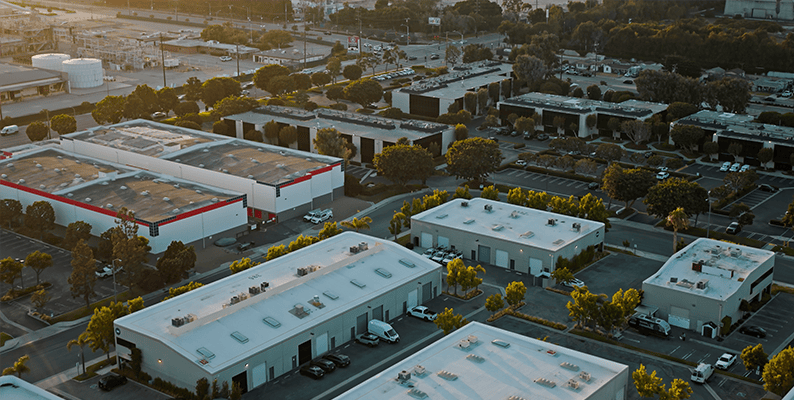
Today, however, a more standardized understanding of IOS is emerging. Addimando defines the asset class as properties ranging from one to 100 acres with limited building coverage and zoning that supports outdoor storage and operational uses.
Infrastructure Investment Fuels Growth
While logistics and transportation companies were historically the dominant users of IOS properties, demand patterns have shifted.
“Three or four years ago,” Addimando explained, “I would have told you it was two-thirds to three-quarters logistics- and transportation-related tenancy.”
Today, federal infrastructure spending, population growth in key markets and the rapid expansion of data centers are generating significant needs for construction equipment, utility contractors and service providers that rely on IOS facilities.
“The logistics folks are not growing right now, and the infrastructure folks are growing. So that’s where the demand comes from right now.”
The data center boom is proving particularly significant. Beyond the facilities themselves, supporting infrastructure for power, water and fiber networks is creating sustained demand for IOS properties across many markets.
Transportation Costs Drive Decision-making
Like every real estate sector, success in IOS begins with location. But the economics driving site selection are somewhat different.
According to Addimando, transportation expenses typically account for about half of an IOS tenant’s operating costs, while occupancy costs represent only a small fraction of the overall budget.
“When your transport costs are 50% of your cost base and your rent costs are 5%, how location-sensitive are you going to be? Very, very location sensitive.”
Proximity to customers, transportation networks and labor pools often outweigh land cost considerations. For many tenants, paying a premium for a well-located site is far more economical than absorbing higher transportation costs over time.
Zoning: The Critical Factor Investors Can’t Overlook
One of the most important lessons for investors entering the sector is understanding zoning. While environmental concerns often receive significant attention, Addimando argues that zoning presents greater risk.
Because few jurisdictions have zoning categories specifically designed for IOS, investors must carefully evaluate whether local regulations support long-term operational uses. Misjudging zoning requirements can significantly impact a property’s value and usability.
Early Innings of Institutional Adoption
Despite growing interest from large investors, Addimando believes IOS remains in the early stages of institutional adoption.
Major private equity firms, sovereign wealth funds and public REITs have begun exploring the sector, but its highly fragmented nature continues to present challenges. Building scale requires aggregating hundreds of smaller properties rather than acquiring a handful of large assets.
However, while challenges around scale and zoning remain, the sector’s fundamentals suggest IOS will play an increasingly central role in supporting infrastructure, logistics and emerging industries. What was once “hiding in plain sight” is now emerging as a recognizable and indispensable segment of the commercial real estate landscape.
Listen to the full episode of the Inside CRE podcast.
This post was created with the assistance of AI tools; all content was reviewed by the author.