
As a new year begins, the economic backdrop feels cautiously constructive, but hardly carefree. The U.S. economy is navigating a complex mix of powerful tailwinds and persistent headwinds, creating a climate best described as measured optimism.
During a recent economic and real estate outlook call hosted by Marcus & Millichap, leading economists and industry experts unpacked what lies ahead for growth, jobs and the major commercial real estate sectors.
At the macro level, the economy is expected to keep moving forward, though not without friction, opened Hessam Nadji, CEO of Marcus & Millichap. Job growth slowed meaningfully in 2025, and that softness is likely to linger.
Moody’s Chief Economist Mark Zandi said, “I wouldn’t expect a whole lot of jobs in 2026, but just enough to keep unemployment close to where it is.” With the national unemployment rate currently around 4.4%, expectations are that it will hover between 4.5% and 5% over the coming year – still low by historical standards, but reflective of a cooler labor market.
The Economic Forecast: Tailwinds Meet Headwinds
The outlook for GDP growth in 2026 rests heavily on two major tailwinds: artificial intelligence (AI) and fiscal stimulus. AI has emerged as a surprisingly powerful growth engine. Zandi pointed to massive investment in data centers, chips, servers and power infrastructure as key signals that it’s full speed ahead. The U.S. continues to lead globally, with roughly 5,000 to 6,000 data centers operating or under construction, far outpacing the rest of the world.
The second channel through which AI is influencing the economy is financial markets. A sharp rise in AI-related stock valuations has driven an enormous wealth effect. “Total shareholder wealth in the U.S. today is about $10 trillion greater than it was a year ago,” Zandi said. Even a modest wealth effect from those gains has translated into stronger consumer spending, particularly among higher-income households.
Layered on top of that is fiscal stimulus – tax cuts, increased government spending and larger tax refunds, which are projected to be about $100 billion higher than last year. Together, these factors should provide a meaningful boost to GDP in the first half of 2026.
Still, headwinds remain. Trade policy, tariffs, restrictive immigration policies, and the risk of financial market volatility in the bond market temper the optimism. “At the end of the day, the tailwinds and headwinds should net out to growth,” Zandi said, “but the risks are still more to the downside than the upside.”
Multifamily: Strong Demand, Thin Supply Ahead
Against that economic backdrop, the multifamily sector stands out for its long-term fundamentals, said Sharon Wilson Geno, president of the National Multifamily Housing Council. Apartment vacancies remain relatively stable and below 5% nationally, but the most striking development is on the supply side. Multifamily starts have fallen roughly 72% from their peak, and units under construction are down more than 50%.
A small group of high-growth metros – such as Dallas, Atlanta, Phoenix, Austin and Houston – account for a disproportionate share of new supply. The sharp pullback in construction is expected to tighten conditions meaningfully as 2026 progresses.
Demand remains well supported by affordability constraints in the for-sale housing market. Only about 25% of Americans can qualify for a typical first-time home purchase, Geno said, and the gap between average rent and a median mortgage payment is the widest on record.
“Renters are staying renters longer,” Geno observed.
Owners are still feeling pressure from insurance, labor and operating costs. Rent growth has yet to fully reflect the coming supply shortage, but the consensus view is that conditions should improve toward late 2026 and into 2027.
Office and Industrial: Diverging but Stabilizing Paths
After a long period of post-pandemic distress, the office market is beginning to show signs of stabilization, said NAIOP President and CEO Marc Selvitelli. For the first time in years, some markets are posting positive net absorption. Daily office attendance is rising and return-to-office mandates are slowly rebuilding demand.
Office performance remains highly bifurcated. Newer, amenity-rich suburban and trophy assets are performing far better than older properties.
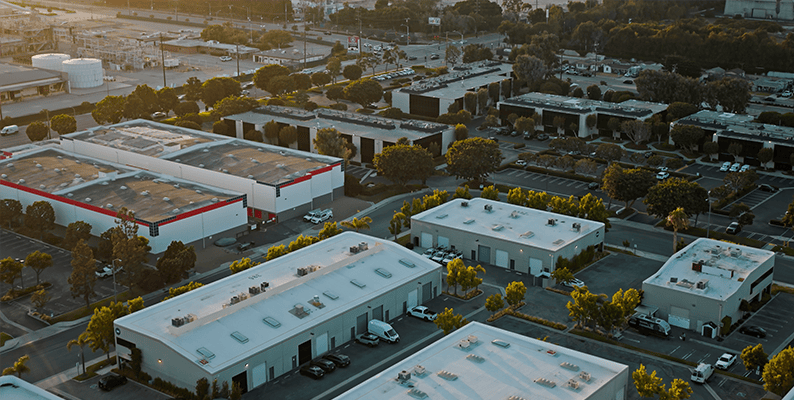
Industrial real estate, by contrast, is working through the aftereffects of a post-pandemic construction surge. Elevated vacancies are less about weak demand and more about an influx of new supply – particularly large, modern facilities. Smaller and mid-sized industrial assets, often owned by private investors, continue to perform relatively well, and the sector is experiencing a recalibration of pre-pandemic demand levels.
Data centers have emerged as a distinct and fast-growing niche. Selvitelli noted that when asked about their involvement in data center development in 2023, 1.8% of NAIOP members responded positively. That number jumped to 12% in 2025 – and is growing. While data center demand has no end in sight, the pushback against its development continues as the net productivity advantages by AI faces mounting scrutiny, as well as excessive energy and water consumption that is blamed for driving up consumer prices.
Bottom Line
Taken together, the 2026 outlook suggests progress, not perfection. Growth should continue, commercial real estate fundamentals are generally moving in the right direction, and opportunities are emerging across asset classes. The speakers agreed that 2026 is expected to be a year that rewards discipline, selectivity and close attention to risk. Zandi summed it up: “It should be a good year – but there are still plenty of things to be nervous about.”